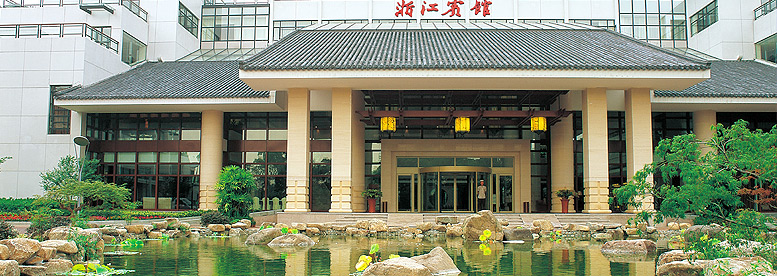
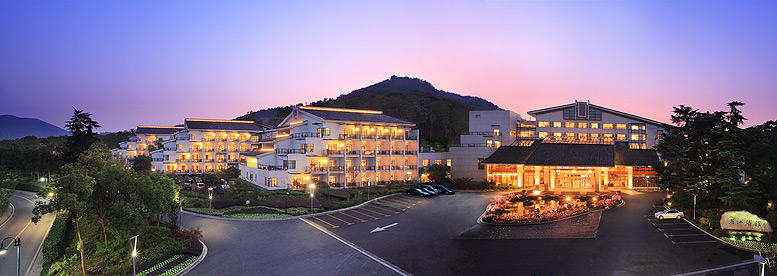
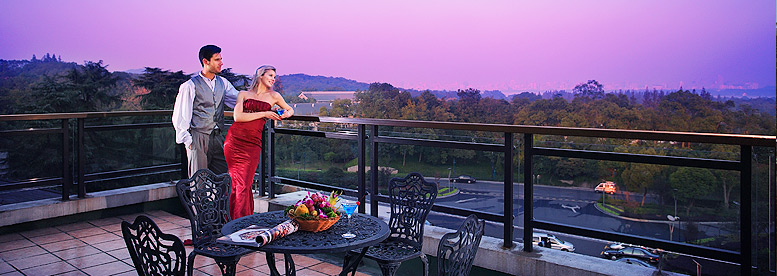
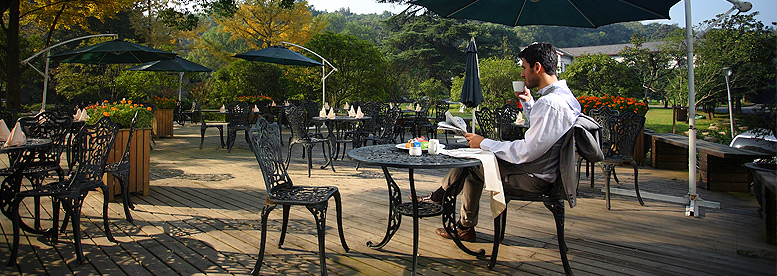
Zhejiang Hotel is located at the center of the New West Lake scenic spot, boasting quiet and beautiful natural resources and rich tourism resources. Scenic spots of the hotel include natural and cultural attractions 2 kilometers around the hotel. Guests could stroll in this area idly to appreciate the beautiful sceneries when stay at the hotel.
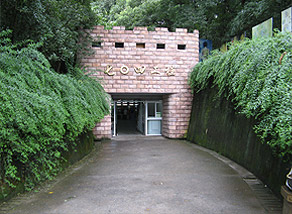
704 Project
The “704” project is located at the west door of Zhejiang Hotel, is a secret villa that built by Lin Biao in Hangzhou. Since construction of this project starts in April 1970, it is named as “704”. It is located at the western West Lake, between South and North Summits, the terrain is extremely enshrouded. Actually, it is also a relatively advanced secret military command center at that time.
Ticket Price:RMB 16 Yuan
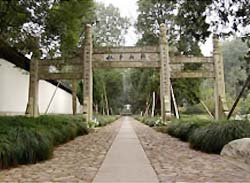
Yuqian Temple Scenic Spot
Through main entrance of the hotel, turn right and you could see the temple. It is located at northern Yugu Bay, the Yuqian Temple inside is comprehensively renovated and “Qimeng Palace” in the history is restored, beside is the graveyard of Yu Qian. In addition, poem tablet porch, academic exchange hall and a batch of pavilions have been built for people to rest.
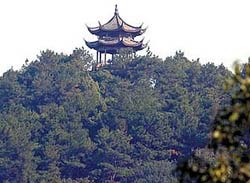
Santai Pavilion
It is located at the mountain back the hotel, approximately 800 meters to the hotel. Standing in the pavilion and overlooking, you could see mountain peaks rising one higher than another, the blue lake is as smooth as a mirror, full view of the West Lake is in front of you. Santai pavilion is included on the West Lake panoramagram of Ming Dynasty, and the current one is renovated in 2004. The footpath to the mountain is also restored, making it a scenic spot that “Climbing mountain you could see the lake and on the lake you could see the mountain”.
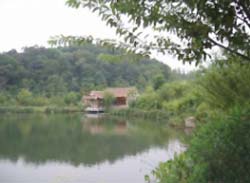
Mirage of Three Platforms
Walk from the hotel for 800 meters and you could see the spot. It is in the southern Yugu Bay and is composed of Xianqian Hall, Lingquan Sin Koon, Tianxiangfayu, Xuefang, etc.. Its buildings possess features of mountain dwellings and water dwellings in Zhejiang. You could appreciate wetland near the lake with a full view of picturesque lakes and mountains.

Longhong Ravine Scenic Spot
Through west entrance of the hotel and you could see Longhong Ravine scenic spot, which is composed of Longhong Ravine wetland and Pufuling wetland as well as happy farmhouse areas nearby. Landscape pavilion with a grass roof is newly built and the origin tea plantation is kept. On the lake there are several islands, making the water surface winding and presenting a scene of leisure farm. The newly restored Yinma Bridge and Yugou Bridge are the most attractive, becoming new tour highlights in the western scenic spot.
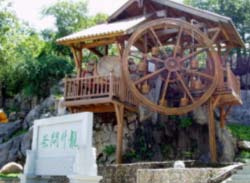
Dragon Well• Inquiring about Tea at Dragon Well
Walk for 15 minutes from the west entrance of the hotel or take 2 bus stops and then you arrive at the
scenic spot. It is located at Fenghuang Ridge, where cross-sectional area of water is wide with plenty
water in source, ancient people regard it as a dwelling place of dragon and thus comes the name “Dragon
Well”. Dragon Well Tea is the most famous tea in China. When emperor Qianlong of Qing Dynasty traveled in
south of the Yangtze River, he designated 18 “royal trees” under the Shizi mountain and titled as “Eight
Scenes in Dragon Well”. Nowadays, it is a good place for leisure tea-
drinking.
| Ticket Price:RMB 10 Yuan | Opening Time:8:30-21:00 |
| Traffic route:K27, Tour line 3 |
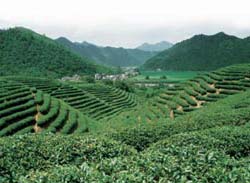
Dragon Well Mountain Park
Walk for 30 minutes from the west entrance of the hotel or take 4 bus stops and then you
arrive at the scenic spot. It displays extensiveness and profoundness of the Dragon Well Tea culture in an
environment with real mountains and real lakes. The tea-drinking trip “from Tang Dynasty to Song, Yuan,
Ming and Qing dynasties, from ancient to modern” is unique in the Dragon Well Mountain Park, through which
tourists could experience tea-making and tea-drinking methods in various dynasties. In addition, there are
also first batch tea party, wedding tea, tea food, tea banquet and theatrical
performances. Besides, the fog forest is also a must-see scene.
| Address:No. 268, Wengjia Mountain, Dragon Well Mountain Park | Traffic route:K27 |
| Destination:Dragon Well Mountain Park |
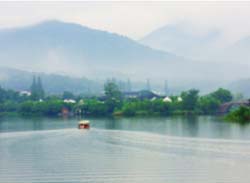
Maojia Pier Scenic Spot
Walk for 400 meters from the west entrance of the hotel or take 1 bus stop and then you arrive at the scenic spot. It is a pure South style village dominated by water scenes. There are plentiful mulberry trees, fruit gardens inside, displaying rural sceneries of land of rivers and lakes in Zhejiang.
| Traffic route:K27 | Destination:Maojia Pier |
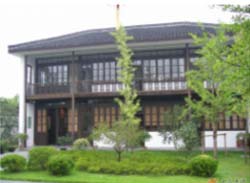
Former Residence of Du Jinsheng
It is located at Maojia Pier, 500 meters to Zhejiang Hotel, which is the birth place of Du Jinsheng, the founder of Hangzhou Dujinsheng Silk Mill and a famous patriotic businessman, also the starting place of his business. Dujinsheng brocade is famous for refined weaving and rich national characters. The former residence is composed of ancestral house, workshop, memorial room and exhibition room, displaying life of Du Jinsheng and silk culture.
| Ticket Price:free | Position:K27 |
| Destination:Maojia Pier |
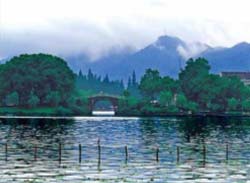
Two Peaks Piercing the Clouds
1500 meters to the hotel from the north entrance. Two peaks refer to South summit and North summit, the pavilion with Imperially-bestowed stone tablets “Two Peaks Piercing the Clouds” is near the Hongchun Bridge. The two peaks face toward each other with a distance over 10 miles. According to predecessor, overlooking the two peaks before raining, which are surrounded by clouds and fogs with the summits partly hidden and partly seen and emperor Kangxi of Qing Dynasty named it “Two Peaks Piercing the Clouds”.
| Ticket Price:free | Traffic route:K27 |
| Destination:Hongchun Bridge |
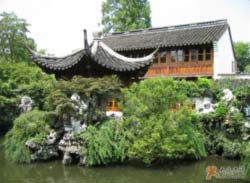
Guozhuang
Its original name is Duanyou villa, which was built in Guangxu 33rd year of Qing Dynasty by Song Ruifu, a
silk businessman in Hangzhou, and was commonly referred to as Songzhuang. During the period of the
Republic of China, the Song family declined and sold it to the Guo family in Fenyang, thus the villa was
renamed as Fenyang villa and was commonly referred to as Guozhuang. It covers an area of nearly 1,000
square meters, and is divided into two scenic spots in south and north direction: Jingbiju and
Yijingtiankai. It is integrated with mountains and rivers sceneries of the West Lake,
boasting the title of “Crown of classic gardens in West Lake”. Professor Chen
Congzhou,a famousgarden expert once evaluated Guozhuang in these
words: “grace is reproduced, as a ancient picture that is newly
mounted”.
| Address:No. 28, Yanggong Dike | Traffic route:Y1、Y5、Y9、K527 |
| Ticket Price:10Yuan | Destination:Guozhuang |
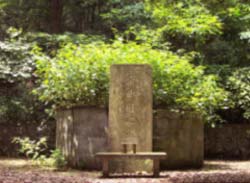
Grave of Yu Quyuan
It is located at east foothill of Santai Mountain, Santaishan Road. Walk for 2 minutes from the hotel. It is the grove of Yu Quyuan, a famous scholar in the late Qing Dynasty. He was served at the Hanlin Academy, editing and Henan school governing, and lectured on Hangzhou Gujing for more than thirty years, having a good master of study of Confucian classics, study of Yi classics and cultures. He wrote numerous books and was regarded as a master of classics.。
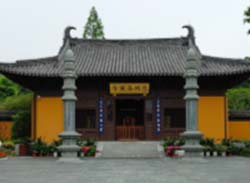
Huiyin Korea Temple
It is located at the west of Santaishan Road, walk for about 8 minutes from the hotel. In 1101, emperor
Huizong in Song Dynasty ascended the throne, Korea dispatched the envoy to congratulate and donated 2,000
liang gold to build the Huayin sutra pavilion of Huiyin temple, and is called “Korea Temple” afterwards.
The temple is regarded as a symbol of friendly relationship between China and Korea, is renovated and
protected by Hangzhou magistrates through dynasties and Korean people. In May 2007, the temple is opened
to the public after being renovated, displaying many
Buddhist arts
that have artistic appreciation value.
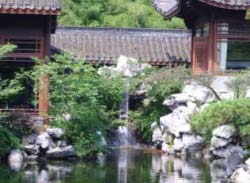
Flower Harbor Park• Viewing Fish at Flower Harbor
You can reach that after walking 10 munities towards the West Lake from the hotel. It is a private garden of a government official in South Song Dynasty more than 800 years ago, is adjacent to mountain and lake, as there is a stream flows through from Huajia Mountain and flows into the West Lake, it is called “Flower Harbor”, currently, it is a traditional place for viewing fish and appreciating peony. 。
| Ticket Price:free | Destination:Yugu Bay |
| Traffic route:tour line 1, tour line 2, tour line 5, holiday line 1, 527/K527, 194/K194 | |
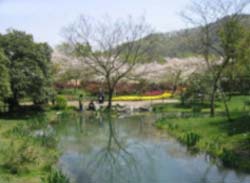
Taizi Bay Park
You can reach that after walking about 15 minutes towards east from the hotel. The name is originated from that the princes Zhuang Wen and Jing Xian of Song Dynasty are buried here. This park is rich in hill style and local sceneries. Currently, it is a famous wedding park and tulip exhibition place. There are thousands cherry trees from Tokyo of Japan, bloom in mid-March, beautiful as rosy clouds.
| Ticket Price:free | Destination:Su Causeway |
| Traffic route:K4, tour line1, tour line 2, tour 3, tour line6, tour line 7, tour line 9, holiday line 5, holiday line 9, 514/K514 (section), K504, K808, 822/K822, 315, night line 1 and night line 2 | |
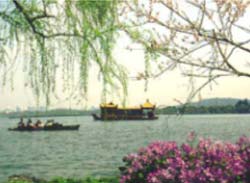
Su Causeway• Spring Dawn at Su Causeway
You can reach that after walking about 15 minutes towards east from the hotel. The total length of Su Causeway is 2.8 kilometers. It is accumulated with mud silting from the West Lake when Su Dongpo of North Song Dynasty was the administrator of Hangzhou. Beautiful sceneries in both sides make you delightful and pleasant. The verse “Six bridges on the West Lake, willow trees and peach trees are planted between” describes the Su causeway in spring.
| Ticket Price:free | Destination:Su Causeway |
| Traffic route:K4, tour line 1, tour line 2, tour line 3, tour line 6, tour line 7, tour line 9, holiday line 5, holiday line 9, 514/K514(section), K504, K808, 822/K822, 315, night line 1 and night line 2 | |

Memorial Hall of Su Dongpo
It is located at south end of Su causeway, adjacent to Little South Lake, graceful and elegant, integrating poem, calligraphy, painting, statue and stone inscription in the same hall, introducing the most famous administrator-Su Shi’s life and the contribution he made to the West Lake.
| Ticket Price:free | Opening Hours:8:30-4:30 |
| Traffic route: K4, tour line 4, tour line 2, tour line 3, tour line 6, tour line 7, tour line 9, holiday line 5, holiday 9, 514/K514 (section), K 504, K808, 822/K822, 315, night line 1 and night line 2. | |
| Destination:Su Causeway | |
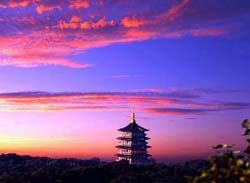
Leifeng Pagoda •Leifeng Pagoda in Evening Glow
You can reach that after walking about 20 minutes.towards east from the hotel Its construction starts in
977 A.D., which is to celebrate Huang imperial concubine of emperor Qian Hongchu giving birth to a son. It
is originally called Huangfeng Pagoda and is changed into the current name because the mountain it is
located called “Leifeng”. When the setting sun glows, the pagoda is resplendent and magnificent and thus
called “Leifeng Pagoda in Evening Glow”. The original pagoda is collapsed in 1924 and the current one is
rebuilt at the original site with a height of 71.96 meters. The
ground floor of the pagoda is the exhibition hall of Leifeng Pagoda
ruins.
| Ticket Price:RMB 40 Yuan | Opening Hours:8:00—17:30 |
| Traffic route:K4, tour line 1, K504, tour line 2, tour line 3, holiday line 9, 822/K822, K808, holiday line 5, tour line 7, tour line 9, tour line 6, 514/K514 (section) | |
| Destination:Jingci Temple | |
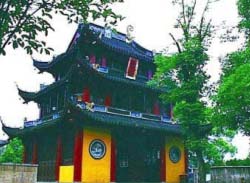
Jingci Temple• Evening bell at Nanping Mountain
You can reach that after walking about 20 minutes towards east from the hotel. Nanping refers to the Nanping Mountain in the south of the West Lake with cliffs standing and looks like a screen. Night bell refers to bell in the Jingci Temple under the mountain. When twilight comes, everything is in silence, the bell rings and echoes in the valley for a long time. Construction of Jingci Temple starts from 954 A.D., which is built for founder of Nanshan Buddhism-Yongming Master. It is said that Ji Gong once cultivated here and generates the legend “ancient well carrying woods”.
| Jingci Temple Ticket Price:RMB 10 Yuan | Destination:Jingci Temple |
| Traffic route:K4, tour line 1, K504, tour line 2, tour line 3, holiday line 9, 822/K822, K808, holiday line 5, tour line 7, tour line 9, tour line 6, 514/K514 (section) | |
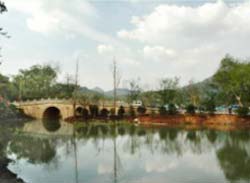
Yanggong Causeway
You can reach that after walking about 20minutes towards east from the hotel. Its total length is 3328 meters. It is accumulated with mud silting from the West Lake by the Hangzhou administrator Yang Mengying in Zhengde 3rd year of Ming Dynasty (1508) and is rebuilt in 2003. There are plentiful tree on the causeway and each forms beautiful scenery.
| Ticket Price:free | |
| Traffic route:tour line1, tour line 2, tour line 5, tour line 9, holiday line 1, 527/K527 | |
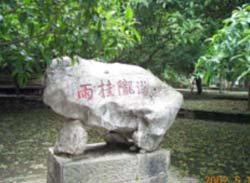
Manjuelong•Sweet Osmanthus Rain at Manjuelong Village
It is about 5 minutes driving distance from the hotel towards the south. It is located at the canyon of south foothill of the south summit. As early in Wuyue period, temple is built in Manlongjue and monks in the temple planted osmanthus, which was called a world of osmanthus. After Ming Dynasty, villagers planted osmanthus tree and sold osmanthus, forming an osmanthus village. When the 8th lunar month comes, with osmanthus smelled even ten miles away, it is a good place to appreciate osmanthus in fall.
| Ticket Price:RMB 40 Yuan | Destination: Zoo |
| Traffic route:K4、K808、315、527、Y5、K504 | |
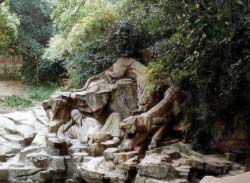
Hupao•Dreaming of Tiger Spring at Hupao Valley
It is about 5 minutes driving distance from the hotel towards the south. It is said that in Yuanhe 14th
year of Tang Dynasty (819), a monk built a temple at here and was ready to leave because of water
shortage. However, he was enlightenmented by God in the dream that two tigers would bring the Tongzi
Spring from the southern mountain on the next day. And on the next day, he really saw two tigers planning
the ground to bring spring and thus generated the Hupao spring. Hupao spring and Longjin tea are called
“two specialties of the West Lake”. Both Jigong and Li Shutong had once been here
according to history and in the park there is a commercial hall of Li
Shutong.
| Ticket Price:15yuan | Destination:Hupao |
| Traffic route:K4、K808、315、527、Y5、K504 | |